
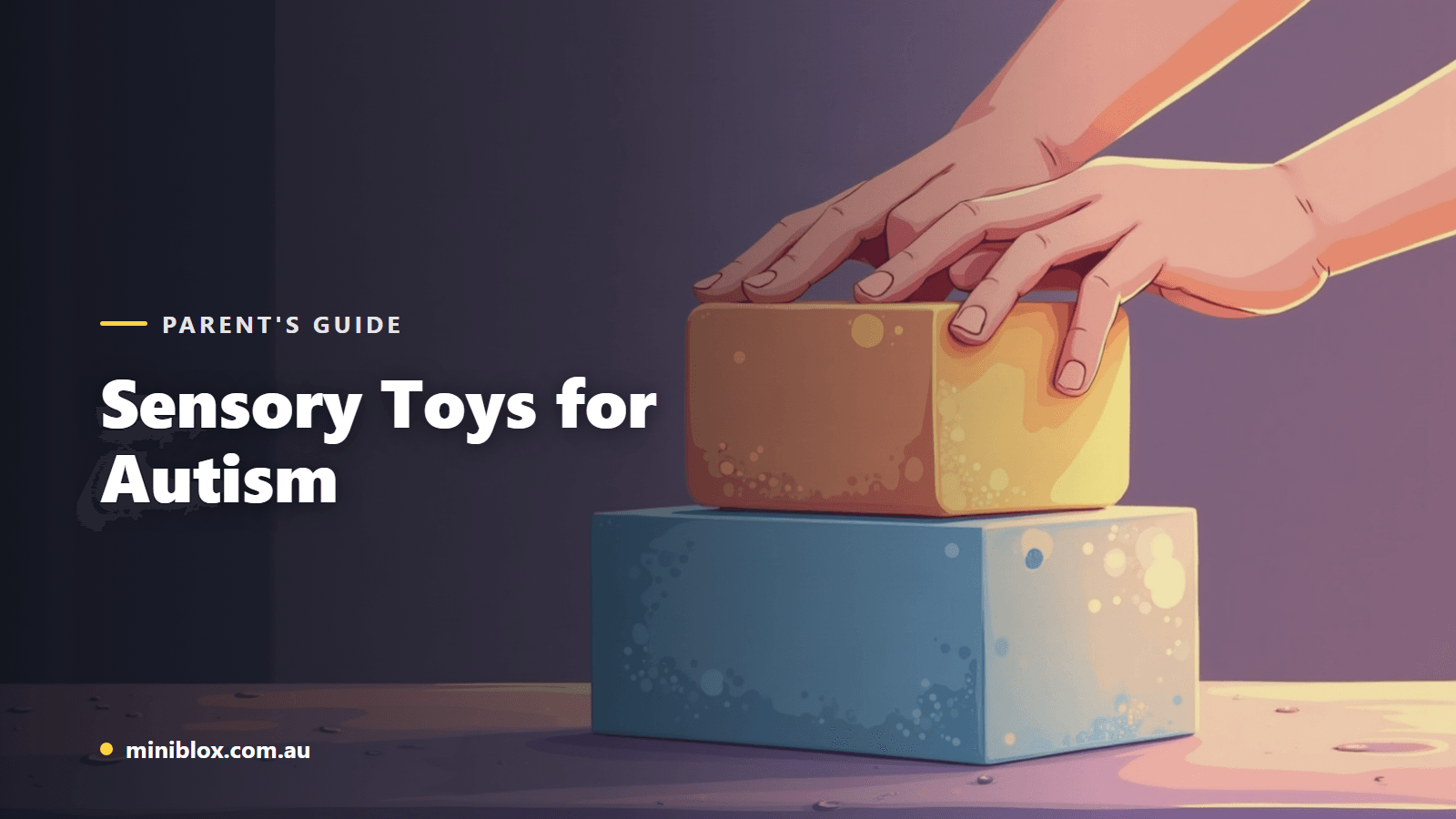
Sensory toys for autism are toys that provide calming, predictable sensory input, squishing, stretching, building, spinning or pressing, that many autistic children find soothing, organising and enjoyable. There is no single best toy, because every autistic child is different: some seek out strong sensory input while others are easily overwhelmed by it. This guide explains how sensory toys can help, how to match them to your child, and the safety points to keep front of mind, written for parents rather than clinicians.
How sensory toys for autism can help
Many autistic children experience the sensory world differently. Some are sensory seekers who crave deep pressure, movement or texture, and may fidget, squeeze or bounce to get the input they need. Others are more sensitive and can feel quickly overloaded by noise, light or touch. A well-chosen sensory toy gives a child a way to meet those needs on their own terms: a predictable, repeatable action they can turn to for calm and focus. That might be squeezing something soft when feelings run high, or losing themselves in the steady rhythm of building. Used this way, sensory toys are not a treatment or a fix, and they do not change who a child is. They are simply a supportive tool, one small, familiar thing that can make a big, busy world feel a little more manageable. Because every child’s sensory profile is unique, it is always worth working with your child’s occupational therapist or support team, who can help you understand what kind of input your child seeks or avoids.
Matching the toy to your child
The right sensory toy depends entirely on what your child is looking for. A helpful first step is to notice the patterns you already see at home.
For sensory seekers. Children who crave touch and pressure often love toys they can squeeze, stretch, squish and pull. Soft, resistant materials give the deep tactile feedback these children seek, and toys that also build let them channel that energy into something absorbing.
For children who need to calm. When a child is heading toward overload, a quiet, repetitive fidget can help them regulate. Slow squeeze-and-release toys work well here because they are soothing rather than stimulating, and having the same familiar toy always to hand makes it a reliable anchor.
For children who focus through movement. Some children concentrate best when their hands are busy. An open-ended building toy gives restless hands a steady job, which can make sitting, listening and transitions easier.
For visual comfort. Gentle, predictable visual input, like watching pieces click together or a soft glow appear, can be calming for children drawn to sight.

What to look for in a sensory toy
Predictable and repeatable. The comfort of a good sensory toy comes from knowing exactly what it will do every time. Toys with a simple, consistent action tend to be the most reassuring.
Quiet and calm, if that suits your child. For a child who overloads easily, a silent, gentle toy is far kinder than a noisy, flashing one. Match the toy’s intensity to your child, not to the packaging.
Durable and safe. Sensory toys get used hard and, for some children, mouthed. Choose non-toxic, BPA-free materials with clear safety testing, and follow the age rating. For children who still explore with their mouths, keep everything taste-safe and free of small parts, and supervise closely.
Easy to clean. A toy that can be rinsed or wiped down stays hygienic and lasts, which matters for a toy your child returns to constantly.
Open-ended. Toys with no fixed outcome let your child use them their own way, which is exactly what makes them feel safe and in control.
Why Jelly Blocks suit many autistic children
Jelly Blocks tick a lot of these boxes at once, which is why they work well as a sensory toy for many children. Each of the 40 pieces is soft and flexible, so it squishes, stretches and gives under the fingers in a way that provides genuine, predictable tactile input, calming for a child who needs to settle, and satisfying for one who seeks touch. They also stack and connect, so a child can fidget and build in the same sitting, giving busy hands a steady focus. They are made from non-toxic, BPA-free TPE, tested to ASTM, CPSIA and CPC safety standards, with no small parts and nothing hard, and they are water-safe, so a calming squish routine can move to the bath and they rinse clean with warm water and mild soap. For calming activity ideas you can try at home, see our guide to sensory play with Jelly Blocks, and for more on the material itself read what Jelly Blocks are made of. For children who focus through building, open-ended magnetic tiles (rated for ages three and up) give hands an absorbing, repeatable job.

A gentle word on expectations
A sensory toy is one tool among many, and it works best as part of the wider support and understanding your child already has around them. What soothes one autistic child may not suit another, so give any new toy time, watch how your child responds, and follow their lead. If a toy helps them feel calm, focused or simply happy, that is a real win. And if you are ever unsure what kind of sensory input would help most, your child’s occupational therapist or support team is the best guide, because they know your child and can tailor suggestions in a way no general article can.
Common questions from parents
What are the best sensory toys for autistic children?
Do sensory toys help with autism?
Are sensory toys safe if my child mouths them?
How do I know which sensory input my child needs?
The bottom line: sensory toys for autism are a gentle, supportive tool, not a fix, and the right one is simply the one that meets your child where they are. Watch what soothes or absorbs them, keep safety front of mind, and lean on your support team for guidance. For a soft, squishable place to start, see Jelly Blocks, and for more on choosing calming, hands-on toys read our guides to fidget toys and the best sensory toys in Australia.
Get our play ideas first on Google
Add Miniblox as a preferred source and our newest activity guides will pop up first in your Google results.